
Science education is evolving fast—and in places like Brisbane, the shift is already visible. Traditional classrooms are no longer the only place where children can explore the wonders of biology, physics, and the natural world. Enter immersive technology—especially holograms.
At innovative attractions like Hologram Zoo MacGregor, kids are stepping into a new dimension of learning—one where science doesn’t just sit on a page, it comes alive.
The Problem With Traditional Science Classrooms
Let’s be honest—many science lessons still rely heavily on textbooks, diagrams, and occasional videos. While these methods work for some students, others struggle to connect abstract concepts with real-world understanding.
Think about learning about wildlife ecosystems without ever seeing animals in motion, or studying the solar system through static images. For many kids, this creates a gap between knowledge and experience.
How Holograms Change the Game
Holographic technology bridges that gap in a powerful way. Instead of imagining a lion’s movement or the structure of DNA, kids can see it, walk around it, and sometimes even interact with it.
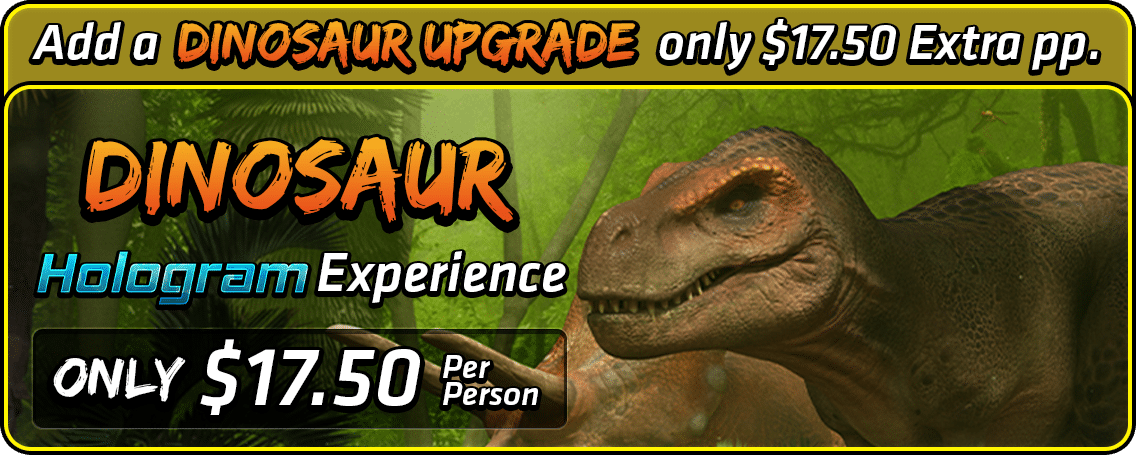
At Hologram Zoo MacGregor, children can observe lifelike holographic animals behaving naturally—hunting, playing, and interacting with their environments. This transforms passive learning into active exploration.
Why This Matters for Science Learning
Better Engagement: Kids are naturally drawn to immersive visuals.
Improved Retention: Experiences stick longer than lectures.
Safe Exploration: Dangerous or extinct animals can be studied up close.
Curiosity-Driven Learning: Kids ask more questions when they’re amazed.
Is It Better Than a Classroom?
Not exactly—but it might be more effective when combined.
Classrooms provide structure, foundational knowledge, and guidance from teachers. But holographic experiences add something classrooms often lack: emotional impact and sensory engagement.
For example, a lesson about African wildlife becomes far more meaningful after a child has “stood” next to a life-sized holographic elephant.
Why Brisbane Families Are Embracing It
In a city like Brisbane, where education and innovation go hand in hand, parents are increasingly looking for ways to supplement classroom learning.
Places like Hologram Zoo MacGregor offer:
Educational outings that feel like entertainment
Screen-free, active learning experiences
Opportunities for kids to connect science with real-world scenarios
The Future of Learning
Holograms won’t replace schools—but they will reshape how kids experience education.
The future likely lies in blending traditional teaching with immersive tools. Imagine classrooms that integrate holographic lessons, allowing students to explore the human body in 3D or witness historical scientific discoveries unfold around them.
Final Thoughts
So, can kids learn science better through holograms than classrooms?
The real answer is: they learn best when both worlds come together.
In places like Brisbane, forward-thinking learning experiences—like those at Hologram Zoo MacGregor—are proving that when education becomes immersive, curiosity follows naturally.
And when kids are curious, learning becomes unstoppable.